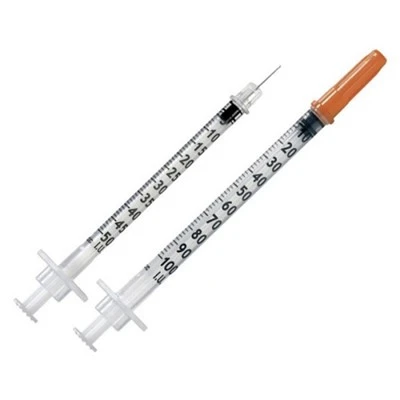
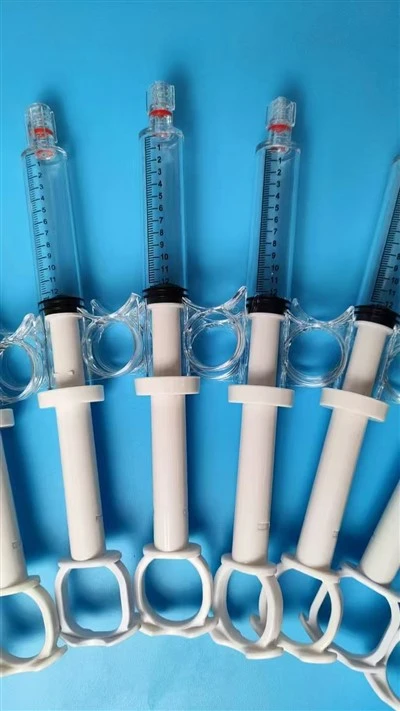
Medical syringes can be classified into two types based on their structure: two-piece and three-piece. A two-piece syringe consists of an outer casing and a plunger. A three-piece syringe consists of an outer casing, a plunger, and a piston.
Besides standard disposable syringes, various specialized types have been developed to improve safety, prevent cross-infection, and reduce occupational exposure. Self-destructing syringes are a type of disposable syringe primarily used for vaccine administration. They have internal self-destruct mechanisms such as spring clips, preventing the plunger from being pulled out or automatically locking after injection, thus preventing reuse. The World Health Organization recommends their use for vaccination and they are also the syringes required by the GAVI (Global Alliance for Vaccines and Immunization) program. Automatic retraction syringes, after use, have the needle break or the needle automatically retract into the outer casing, preventing needle pricks and avoiding reuse. Needle-free syringes administer medication without a needle, using a high-pressure jet principle to create a fine stream of liquid that instantly penetrates the skin to reach the subcutaneous layer.
Furthermore, various specifications and models are available based on capacity, cone design, and other factors to meet different clinical needs.